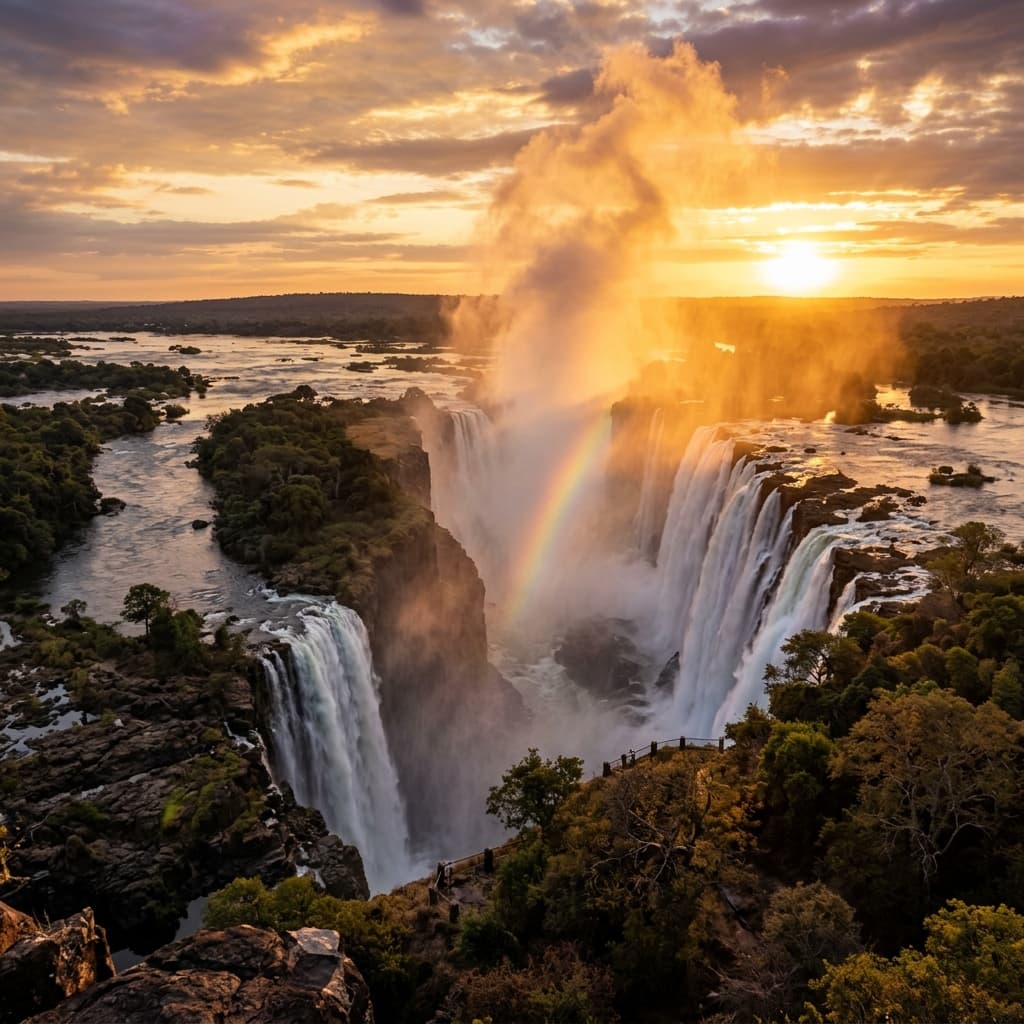
Victoria Falls & Livingstone
The Smoke That Thunders (Mosi-oa-Tunya)
Victoria Falls is one of the Seven Natural Wonders of the World and a UNESCO World Heritage site. Spanning 1.7 kilometers across and plunging 108 meters into Batoka Gorge, its thunderous roar and rainbow mist create an unforgettable spectacle.
Historical Background & Origins
Known locally for centuries as Mosi-oa-Tunya ("The Smoke That Thunders"), the falls were named Victoria Falls by Scottish explorer David Livingstone in 1855 in honor of Queen Victoria. Livingstone town subsequently developed as Northern Rhodesia's first capital and a key commercial gateway along the historic Cape-to-Cairo railway route across the Victoria Falls Bridge built in 1905.
Flora, Fauna & Habitat
Surrounding Mosi-oa-Tunya National Park is home to white rhinos, elephants, buffalos, giraffes, and hippos along the upper Zambezi River. The spray-fed rain forest around the falls supports rare flora, mahogany, and ebony trees filled with trumpeter hornbills and vervet monkeys.
Signature Activities & Experiences
What You Attain With Mekelani
VIP priority access to Livingstone Island and Devil's Pool charters, luxury Zambezi riverfront lodge bookings, and seamless private transfers between Livingstone airport, hotels, and activity sites.
Climate & Seasonal Notes
Warm year-round. Peak water flow occurs from March to May after the rainy season. Dry season from May to October offers clear skies and ideal conditions for white-water rafting and Devil's Pool swimming.
Ready to Experience Victoria Falls & Livingstone?
Contact our expert local guides and consultants to tailor your itinerary, safaris, and logistics today.